Megawheels A1A review: price, positioning and what to check before buying
The Megawheels A1A is an entry-price electric scooter with an official list price of $180 and a first listing date of September 2026. This overview does not guess its range, speed, motor, or battery specs. Instead, it explains what this price tier usually delivers, who should consider it, and what you must confirm on the official spec sheet before buying.
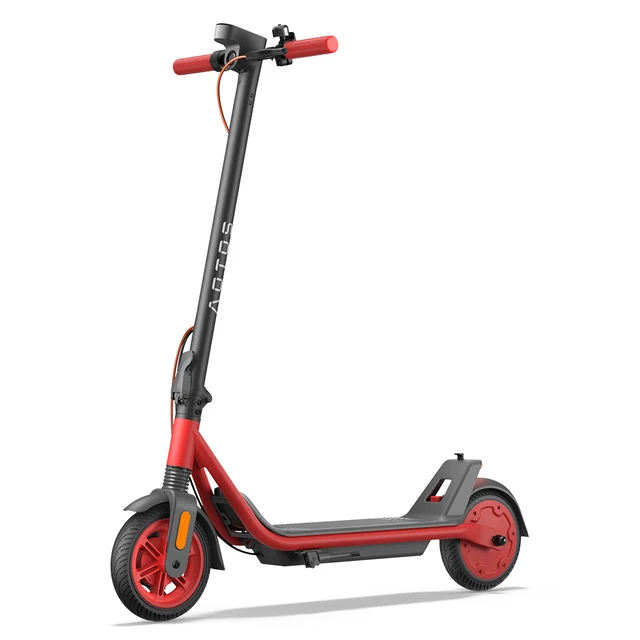
| Brand | Megawheels |
|---|---|
| Model | A1A |
| Official list price | $180 |
| First listed | September 2026 |
| Status | New release |
Specifications
We do not publish secondhand specification numbers for this model. Scooter specs copied between sites are frequently wrong, and we would rather show you nothing than show you something inaccurate - the official store link above carries the manufacturer's own spec sheet, which is the only version the brand stands behind.
What the $180 price tier delivers
At $180, you are not paying for premium performance, app connectivity, hydraulic brakes, or long-distance touring capability. You are buying a low-cost first scooter or short-trip device. The money typically goes toward a basic frame, a simple motor controller, a small battery pack, and entry-level tires and brakes. Many scooters in this tier are designed for light, occasional use rather than daily high-mileage commuting. The A1A may be perfectly adequate for a child, a teenager, or a very short adult trip, but it is unlikely to match a $500–$1,000 scooter for speed, range, hill climbing, or weather resistance. Treat the $180 price as a signal to verify every specification carefully.
Who the Megawheels A1A suits
The A1A is likely best suited to a rider who needs basic, low-cost mobility for short distances: a campus shuttle replacement, a quick trip to a local shop, or a first scooter to learn on. It can also work as a backup or a gift for a responsible younger rider, provided the official weight limit and age guidance match. It is not aimed at riders who need to keep up with traffic, climb long steep hills, carry heavy loads, or commute many miles each day. If your route includes rain, rough roads, or no bike lanes, a higher price tier is usually safer and more durable. Check the official rider weight limit before assuming it fits you.
Range claims vs real-world use
Range is the most inflated spec in entry-level scooter marketing. A quoted figure often assumes a light rider, moderate speed, flat ground, warm weather, and a new battery. Real-world range drops with heavier riders, hills, headwinds, cold temperatures, frequent acceleration, and underinflated tires. For a $180 scooter, treat any range claim as an optimistic ceiling, not a promise. Before buying, look for battery capacity in watt-hours (Wh) on the official spec sheet, since Wh is a better cross-comparison than miles. Also check whether the charger and battery are user-replaceable or proprietary. If the A1A's official sheet does not list Wh or gives only a vague range, plan for short trips and keep charging options nearby.
Weight limit and build quality
The maximum rider weight is a safety limit, not a suggestion. On a $180 scooter, the frame, stem, deck, and folding mechanism are built to a price, so exceeding the limit can cause flex, cracking, or sudden failure. Check the official spec sheet for the maximum load and compare it with your actual riding weight plus a backpack, locks, or groceries. Also look for the recommended rider age and height. If the limit is close to your weight, choose a higher-rated model. Inspect the folding latch and stem lock in person if possible; a wobbly stem is a red flag. A low price should never override a safe weight rating.
Tire type, brakes, and maintenance
Tire type changes both comfort and upkeep. Solid tires resist punctures but transmit more vibration and can lose grip on wet or uneven surfaces. Pneumatic tires ride better but need correct pressure and can puncture. Check the official spec sheet for tire size and type, and confirm whether replacement tires and inner tubes are easy to buy. Brakes matter just as much: at this price, you may find an electric rear brake, a basic drum brake, or a simple friction brake. Test braking distance on a safe surface before trusting it in traffic. Also check that the stem, folding joint, and brake cables can be adjusted or serviced. Cheap scooters often become disposable when proprietary parts fail.
Local legality and safety gear
Electric scooter laws vary widely by country, state, and city. Some places allow them on bike lanes and roads with speed and power limits; others restrict them to private property or ban them entirely. Before buying the Megawheels A1A, check your local rules for maximum assisted speed, motor wattage, rider age, helmet requirements, and where scooters may be ridden. You will need the official spec sheet to compare the A1A against those limits, so do not rely on marketing claims. Also budget for a certified helmet, lights, and reflective gear. A low purchase price does not reduce the legal or safety responsibilities of riding in traffic.
FAQ
Is the Megawheels A1A good for daily commuting?
Only if your commute is very short and you can verify the official range, weight limit, and local legality. At $180, it is an entry-level scooter, so it is better suited to occasional short trips than long daily commutes. Check real-world range expectations, braking, and tire type before relying on it for work travel.
What range should I expect from a $180 electric scooter?
We cannot state a range for the A1A because we only list verified price and release data. In general, $180 scooters have modest real-world range compared with pricier models. Manufacturer claims often assume ideal conditions. Check the official spec sheet for battery watt-hours, then reduce any claim for hills, cold, rider weight, and stop-start riding.
Is the Megawheels A1A legal on public roads?
That depends entirely on your local laws. Many regions cap electric scooter speed or motor power, require helmets, or restrict riding to bike lanes. Since we do not invent A1A specs, you must compare its official speed and motor ratings against local rules. Contact your local transport authority before buying if you plan to ride on public roads.
What should I check on the official spec sheet before buying?
Verify maximum rider weight, tire type and size, brake type, battery watt-hours, claimed range, top speed, motor wattage, charge time, and any age restrictions. Look for replacement parts availability. If the spec sheet is vague or missing key numbers, treat that as a warning sign and consider a higher-priced scooter with clearer documentation.
We may earn a commission if you buy through links on this page - at no extra cost to you.